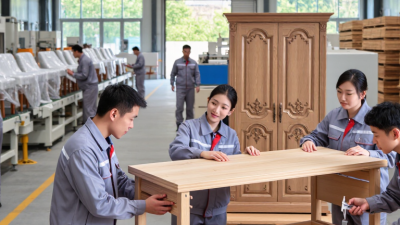
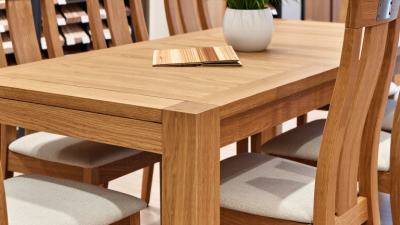
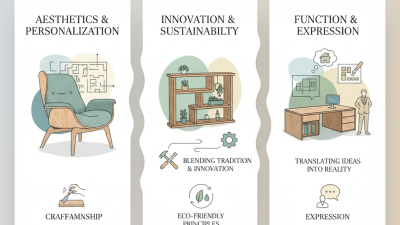
China’s Top 10 Local Furniture Makers for Global Buyers explores where craftsmanship meets international sourcing. China’s furniture industry is no longer defined only by scale. Many local furniture makers now combine skilled handwork, digital production, and flexible customization. Their workshops may include CNC routers, fabric rooms, wood-finishing areas, and small teams checking each edge by hand.
Details matter.
A useful design principle comes from Danish furniture expert Hans J. Wegner: “A chair is to have no backside. It should be beautiful from all sides and angles.” His words offer a practical lens for evaluating Chinese manufacturers. Buyers should examine visible joinery, surface consistency, upholstery tension, packaging quality, and sample accuracy. A polished showroom is not enough. Factory visits, production samples, material certificates, and clear inspection procedures provide stronger evidence.
This guide considers ten local furniture makers with global buyers in mind. It looks at product specialization, manufacturing experience, export readiness, communication, customization, lead times, and quality control. Some makers excel at solid wood tables. Others focus on hotel furniture, modern sofas, outdoor collections, or contract projects. None is perfect.
That matters.
A supplier may offer impressive prices but struggle with documentation. Another may deliver beautiful samples but lack stable capacity. These weaknesses deserve attention, not concealment. Global buyers should compare verified information, request written specifications, and test samples before placing larger orders. The goal is not to find the loudest factory. It is to identify a dependable partner whose materials, workmanship, and promises remain consistent from the first sample to the final shipment.
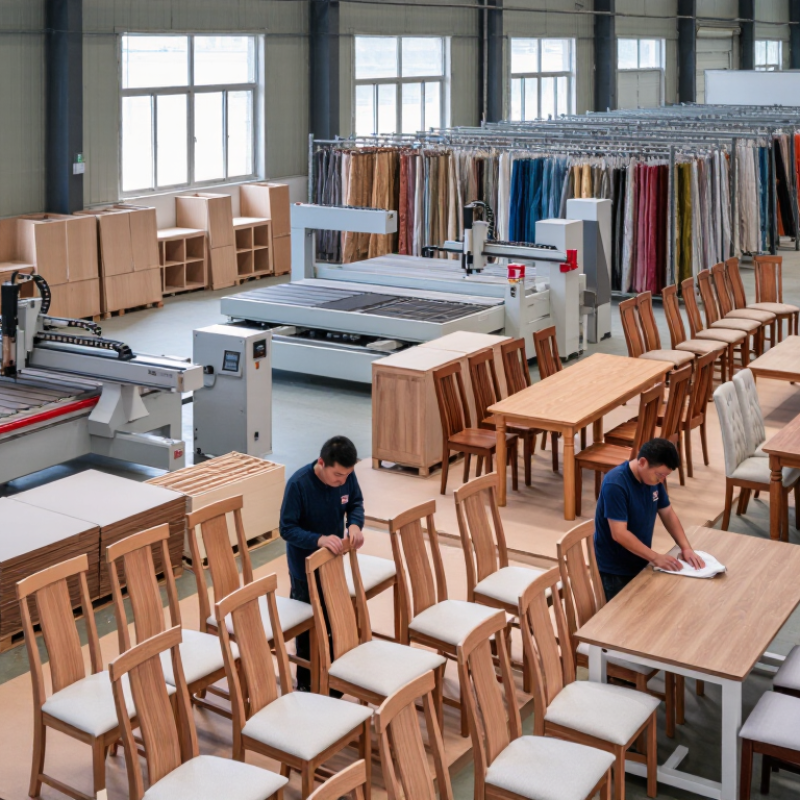
China’s furniture manufacturing landscape is broad, regional, and highly specialized. Guangdong often serves hospitality and contemporary furniture projects, while Jiangsu and Zhejiang support large-scale production. In northern areas, buyers may find stronger solid wood expertise and traditional joinery. A top-ten list should not rely on factory size alone. Production consistency, material control, export experience, and communication matter more for long-term cooperation.
During supplier evaluations, inspect wood moisture readings, edge finishing, welding points, and carton protection. Ask for recent production photographs and a physical sample before approving bulk orders. Reliable factories usually provide clear specifications, test reports, packing details, and realistic lead times.
They should also explain how they handle color variation, replacement parts, and quality claims. A low quotation can hide thinner panels, weaker hardware, or costly rework. I have seen buyers focus too heavily on price. That choice often creates delays later.
Tips: Compare at least three factories from different regions. Use the same drawings and material list for every quotation. Check factory capacity during peak seasons. Confirm whether quality inspections happen before packing. Keep expectations written, because verbal promises can become unclear. No shortlist is perfect. Local visits, independent inspections, and small trial orders still provide stronger evidence than polished online profiles.
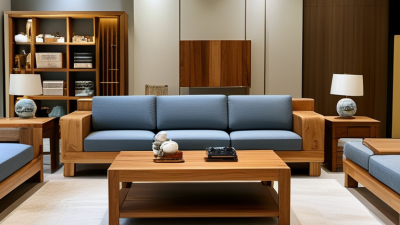
China Top 10 Local Furniture Makers for Global Buyers
Ranking the top ten Chinese furniture makers requires more than comparing catalog photos. A credible review begins with factory evidence, not attractive promises. Site visits can reveal production flow, worker skills, storage conditions, and quality checkpoints. Product samples should match the final shipment in materials, dimensions, stitching, and surface finish.
Experience with international orders is another important measure. Strong manufacturers explain lead times, packaging methods, container loading, and inspection procedures clearly. They should provide material specifications, test reports, and traceable records when requested. Communication also matters. A reliable supplier answers technical questions directly and reports delays before they become expensive problems.
Capacity needs careful judgment. A large workshop may offer stable output, while a smaller one may handle custom designs better. Neither option is automatically superior. Pricing deserves limited weight because the cheapest quotation can hide weak packaging or inconsistent materials. After-sales support, replacement procedures, and production updates should also influence the score.
The ranking should remain flexible. A factory that performs well for hotel projects may not suit residential buyers. This is where many online lists become too simple. My own evaluation would combine documentary evidence, sample inspections, buyer feedback, and repeated communication. Even then, no ranking is permanent. Quality can change with suppliers, managers, equipment, or workload.
China’s leading local furniture makers differ sharply by region and specialty. In the Pearl River Delta, two makers focus on upholstered sofas and hotel seating. Their workshops use foam-density checks, stitched samples, and repeated frame testing. One factory impressed us with clean production lines, but its packaging process still needed improvement.
The Yangtze River Delta contributes three strong furniture makers. One specializes in solid wood dining tables, another in engineered panels, and the third in office workstations. These workshops usually offer precise machining and flexible finishes. We examined moisture readings, edge quality, hardware alignment, and sample consistency. Small details matter. A beautiful table can still fail during shipping.
Fujian adds two makers known for rattan furniture and compact outdoor collections. Shandong contributes a maker focused on metal frames and institutional seating. Jiangxi completes the group with a workshop producing affordable bedroom furniture. Regional skills are useful, but location alone proves little. Buyers should verify factory ownership, material certificates, production capacity, worker safety, and quality records. We also recommend a paid sample before large orders. Some suppliers promise faster delivery than their actual schedules support. That gap deserves careful attention. A reliable evaluation should include factory visits, independent inspections, and clear tolerance standards written into the purchase agreement.
China’s top ten local furniture makers can differ greatly in quality, customization, certifications, and pricing. For global buyers, inspect kiln-dried timber, veneer alignment, joint strength, and surface consistency. Ask for moisture readings and close-up photos before approving production. A polished showroom is not proof. Bulk quality may still vary.
Customization should include drawings, dimensions, materials, colors, packaging, and hardware options. Confirm which changes affect tooling fees or minimum order quantities. Request a production sample and a small pilot order. For certifications, check the certificate number, issuing organization, expiry date, and product scope. Relevant evidence may include FSC documentation, ISO 9001 systems, or destination-specific safety and emissions test reports. Certifications can be misunderstood, even by experienced buyers.
Pricing requires more than comparing unit quotes. Review material grade, labor, packaging, inspection, shipping terms, and replacement policies. A very low price may hide thinner panels or weaker fittings. Tips: Use one written specification for all ten makers. Record every revision. Ask suppliers to identify exclusions clearly. I would also leave room for mistakes; a first sample may reveal an awkward handle, uneven color, or packaging damage. That feedback is useful before committing to full production.
Comparing product quality, customization, certifications, and pricing competitiveness
The chart uses a normalized 0–100 procurement benchmark, where higher scores indicate stronger performance. Product quality reflects material consistency and manufacturing control; customization reflects design, finish, and specification flexibility; certifications reflect the availability of internationally recognized compliance documentation; and pricing competitiveness reflects value for global buyers. Scores are editorial benchmark estimates for anonymous supplier profiles and are not company disclosures.
China Top 10 Local Furniture Makers for Global Buyers?
A supplier list can open doors, but it cannot prove factory capability. Rankings change. Production teams also change. Global buyers should verify each manufacturer through current business documents, workshop evidence, and customer references. Request a live video tour showing cutting, sanding, upholstery, packing, and storage areas. Staged photos are not enough.
Begin with a detailed product brief. Include wood species, dimensions, moisture limits, finishes, hardware, packaging, and acceptable defects. Order a paid sample before discussing large volume. Measure it carefully. Check joints, surface consistency, odor, carton strength, and assembly instructions. My experience is that one sample can look excellent while the second reveals process weakness. That warning matters.
Ask how quality inspections are recorded. Reliable factories can show inspection forms, corrective actions, and batch photos. Confirm who owns the tooling and who approves design changes. Use clear purchase contracts with specifications, tolerances, delivery terms, inspection rights, and payment milestones. Independent pre-shipment inspection adds useful distance. It is not perfect.
Communication deserves equal attention. Ask technical questions and compare the answers from sales and production staff. Delayed replies may signal overloaded management. Visit the factory when possible, or hire a qualified local auditor. Start with a controlled pilot order. Track defects, response time, packaging damage, and actual lead time. A supplier that accepts documented feedback is often safer than one offering the lowest quote.
| Rank | Anonymous Supplier Profile | Manufacturing Hub | Main Product Strengths | Typical Factory Scale | Typical Export Markets | Indicative MOQ | Typical Production Lead Time | Documents and Certifications to Request | Key Verification Actions |
|---|---|---|---|---|---|---|---|---|---|
| 1 | Supplier Profile A | Foshan, Guangdong | Dining furniture Bedroom furniture Panel furniture | Medium to large; commonly organized around automated panel-processing and assembly lines | North America, Europe, Australia, Southeast Asia | 100–300 units per SKU | 35–60 days after approved samples and deposit | Business license, ISO 9001 where applicable, FSC chain-of-custody for certified wood claims, product test reports | Match the factory address on the license with the video audit location; inspect panel edge-banding, moisture control, packaging, and final inspection records. |
| 2 | Supplier Profile B | Dongguan, Guangdong | Custom cabinetry Storage systems Contract furniture | Medium; often operates dedicated project, engineering, and installation-support teams | United States, Canada, Middle East, Europe | 50–150 units per configuration | 45–75 days for customized projects | Business license, material declarations, fire-performance reports when required, ISO documentation if claimed | Approve shop drawings, confirm change-control procedures, verify hardware specifications, and conduct a pre-shipment inspection. |
| 3 | Supplier Profile C | Shunde, Foshan, Guangdong | Upholstered seating Sofas Lounge chairs | Small to large; production is typically divided among frame, foam, sewing, upholstery, and assembly departments | Europe, North America, Australia, Gulf countries | 30–100 units per fabric and model combination | 40–70 days, depending on fabric and foam approval | REACH-related material declarations where applicable, flammability test reports, textile composition records, quality inspection reports | Check frame joinery, foam density, seam consistency, fabric lot control, odor, carton compression, and applicable fire-safety compliance. |
| 4 | Supplier Profile D | Yuhuan, Zhejiang | Solid wood furniture Occasional tables Dining sets | Small to medium; commonly uses kiln-drying, machining, sanding, staining, and finishing workshops | Europe, Japan, South Korea, North America | 50–200 units per finish and model | 45–75 days, excluding new tooling or finish development | Wood species declaration, legal timber documentation, FSC documentation if claimed, moisture-control records, finish safety reports | Verify timber species and origin, measure moisture content, inspect warping and joint strength, and test finish durability. |
| 5 | Supplier Profile E | Jiashan, Zhejiang | Mattresses Bedroom furniture Sleep products | Medium to large; usually includes quilting, foam or spring assembly, sewing, compression, and packaging capacity | Europe, North America, Australia, Southeast Asia | 100–500 units per specification | 30–60 days after material and firmness approval | Textile and chemical test reports, flammability documentation where required, material composition, factory quality manual | Confirm firmness and dimensional tolerances, review foam and textile test results, inspect hygiene controls, and validate compression-packaging recovery. |
| 6 | Supplier Profile F | Lanxi, Zhejiang | Rattan furniture Outdoor seating Woven furniture | Small to medium; often combines skilled hand weaving with metal or aluminum frame production | Europe, North America, Australia, resort and hospitality markets | 50–200 units per color and design | 45–80 days, with seasonal variation for woven materials | Material specifications, corrosion-resistance test reports, outdoor durability data, packaging and fumigation documents where applicable | Inspect welds, weave tension, UV and weathering claims, coating thickness, load capacity, and carton protection. |
| 7 | Supplier Profile G | Ningbo, Zhejiang | Flat-pack furniture Home office furniture Metal-wood combinations | Medium to large; generally benefits from established hardware, packaging, and export-logistics networks | United States, Europe, Canada, Japan | 200–1,000 units per SKU | 30–55 days for established designs | Business license, load and stability test reports, material declarations, packaging test records, ISO documents if claimed | Perform assembly trials using production cartons, verify hardware counts, test wobble and load capacity, and review barcode and carton-control systems. |
| 8 | Supplier Profile H | Qingdao, Shandong | Solid wood bedroom furniture Dining furniture Institutional furniture | Medium; typically maintains woodworking, finishing, assembly, and export-packaging departments | Europe, North America, Japan, South Korea | 100–300 units per design and finish | 45–70 days after sample sign-off | Timber legality records, formaldehyde or emissions reports where required, finish specifications, inspection records | Audit kiln-drying records, check formaldehyde-control materials, inspect color consistency, and verify container loading plans. |
| 9 | Supplier Profile I | Chengdu, Sichuan | Residential furniture Custom woodwork Regional project furniture | Small to medium; often stronger in flexible customization than in very high-volume standardized production | Domestic China, Southeast Asia, Central Asia, selected European projects | 20–100 units per customized model | 50–90 days for project-based orders | Business license, material and finish declarations, project quality plan, inspection reports, export eligibility documents | Review production capacity during peak periods, verify subcontractor controls, approve detailed drawings, and use milestone-based payments. |
| 10 | Supplier Profile J | Shanghai and Jiangsu manufacturing corridor | Office furniture Healthcare furniture Commercial interiors | Medium to large; commonly provides engineering, project management, and institutional procurement support | Europe, North America, Asia-Pacific, Middle East | 50–300 units per configuration | 45–80 days, depending on project engineering and testing | Product safety reports, fire-performance documentation, environmental declarations where applicable, ISO documentation if claimed | Verify tender references without relying solely on supplied testimonials; inspect prototypes, review installation manuals, and confirm warranty service coverage. |